
About ABA
What Is ABA Therapy? A Plain-English Guide for Parents

Written by the Golden Touch ABA clinical team. Medically reviewed by Lily Palmer, M.Ed., BCBA, LBA
October 28, 2026 · 10 min read
Somewhere between the diagnosis appointment and the car ride home, a new acronym enters your life. The pediatrician says your child should start ABA. The report says the same thing. So does every parent in the Facebook group. Nobody stops to explain what the letters stand for, what actually happens, or why it is the thing everyone keeps recommending.
This guide is the explanation we wish every family got before their first phone call. No jargon, no sales pitch, and honest about the parts of ABA that have changed, and needed to.
What is ABA therapy?
ABA therapy is a one-on-one therapy that teaches children with autism the skills they are struggling to pick up on their own, by breaking each skill into small steps, practicing those steps in everyday moments, and rewarding progress. The letters stand for Applied Behavior Analysis. "Behavior" here means anything a person does: talking, pointing, putting on shoes, waiting for a turn, hitting when frustrated. "Analysis" means the therapist pays close attention to what happens before and after each behavior, because that is what tells you how to teach a new one. "Applied" means it is used on things that matter in real life, not in a lab.
Strip away the terminology and the core idea is one every parent already uses. If a child does something and good things follow, they do it more. ABA takes that idea seriously enough to be systematic about it: decide exactly what you want to teach, figure out what this particular child finds worth working for, give them many chances to practice, and measure whether it is working. If it is not, change the approach, not the goal.
A Board Certified Behavior Analyst, or BCBA, designs each child's program. A trained behavior technician, usually a Registered Behavior Technician or RBT, delivers most of the sessions. Parents are part of the team from the first day. At Golden Touch, all of it happens in your home.
What does ABA therapy actually teach?
Whatever is getting in your child's way most. That sounds like a dodge, but it is the honest answer, because no two programs have the same goals. A two-year-old with no words and a nine-year-old who talks nonstop but cannot keep a friend need completely different things from the same therapy. The goals are chosen with you, written down in a treatment plan, and measured every session. These are the areas most plans touch.
| Skill area | Example goals | What teaching it looks like at home |
|---|---|---|
| Communication | Asking for things with words, signs, or a tablet; answering questions; telling you something hurts | The favorite snack is up on the counter. The therapist waits for a point, a word, or a tap on the device, then hands it over right away. |
| Social and play | Taking turns, sharing attention, playing with a sibling, joining a game at recess | A board game at the kitchen table where the therapist builds in waiting, losing, and cheering for someone else. |
| Daily living | Toilet training, getting dressed, brushing teeth, eating more than three foods, sleeping in their own bed | Real mornings and real bedtimes, with the skill broken into steps your child can finish and feel good about. |
| Coping and flexibility | Handling "no," moving from the tablet to dinner, tolerating a haircut, asking for a break instead of melting down | Short, planned practice of the hard moment with support, then slowly less support as it gets easier. |
| Safety | Staying near a parent in a parking lot, not bolting out the front door, responding to their name | Practiced at the actual front door and on actual walks, since that is where it has to work. |
| Learning readiness | Sitting for a story, following a two-step direction, copying what a teacher does, raising a hand | Built into play first and stretched a little at a time, so kindergarten does not arrive as a shock. |
One thing you will not find on that list is "looking less autistic." Hand-flapping, rocking, and humming are not goals in a good program unless they are hurting someone. We wrote a whole piece on why we usually leave stimming alone.
What does an ABA session look like?
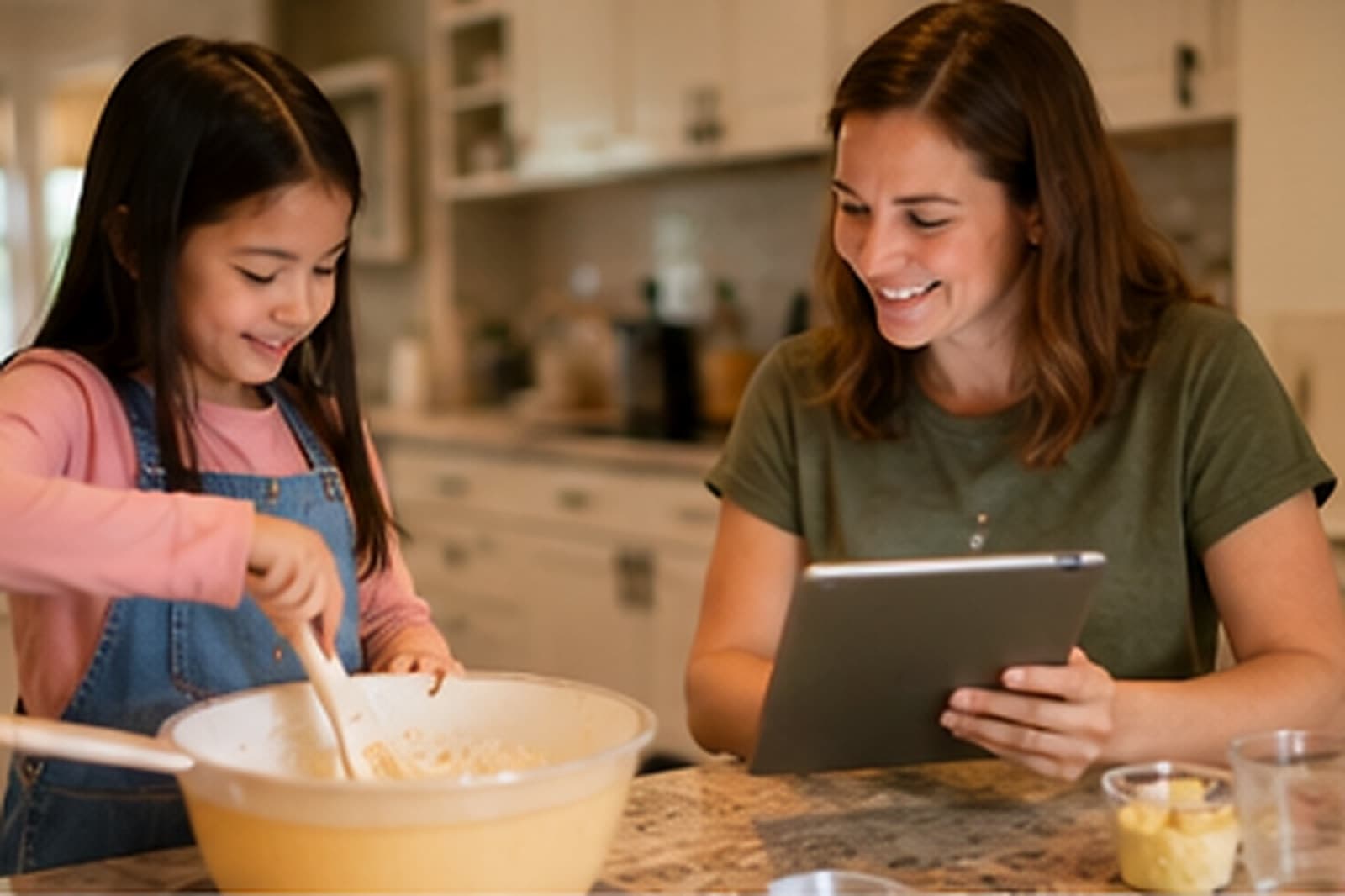
Mostly like play, with a lot of teaching hidden inside it. A session runs two to four hours. The technician arrives, spends the first stretch simply being fun to be around, and then starts working goals into whatever your child is already doing. If the goal is requesting, the bubbles get capped until your child asks for more. If the goal is turn-taking, the cars go back and forth across the floor. If the goal is tolerating "all done," the tablet goes away for thirty seconds and comes back as soon as your child handles it calmly, then a minute, then five.
Every goal gets a quick note on a tablet: did your child do it on their own, with a hint, or not yet. That data is not paperwork for its own sake. It is how the BCBA knows, week by week, whether a goal is moving or needs a different approach. Parents are welcome in the room, and part of most sessions is set aside for showing you what worked so you can use it after the therapist leaves. We walked through a full in-home session, hour by hour, if you want the detailed version.
What you should not see: a child sitting at a table for hours repeating the same drill, a therapist forcing eye contact, or anyone withholding food or affection until a child complies. That is what ABA sometimes looked like decades ago. It is not what good ABA looks like now, and it is not what happens in our homes.
Who delivers ABA therapy?
A small team, with clearly different jobs. Knowing who is who helps you know whom to ask what, and it helps you judge a provider before you sign anything.
| Role | Training | What they do for your child |
|---|---|---|
| BCBA (Board Certified Behavior Analyst) | Master's degree, supervised fieldwork, a national board exam, and a state license in Utah and Maryland | Assesses your child, writes the treatment plan, trains and supervises the technician, meets with you, and adjusts the program as your child changes |
| RBT (Registered Behavior Technician) | A 40-hour course, a hands-on competency check, a national exam, and ongoing supervision by a BCBA | Runs most of the sessions, teaches the goals in the plan, records the data, and becomes the person your child is excited to see at the door |
| Parents and caregivers | Parent training is part of every program and billed to insurance like any other service | Carry the skills into the other 140 hours of the week, and tell the team what is working and what is not |
The ratio between those first two roles is where providers differ most, and it is the question we would ask any company before signing up: how many families does each BCBA carry, and how often will the BCBA actually be in my house? Across much of the industry a BCBA supervises 15 to 20 or more children and shows up every other week, or less. Our BCBAs average about ten families and visit every week, because a technician who is coached weekly teaches better, and a plan that is reviewed weekly fixes itself faster. We also do not set billable-hour quotas for our clinicians, so nobody is tempted to recommend hours your child does not need.
How many hours a week is ABA therapy?
Most children receive between 10 and 40 hours a week, which is a wide range because the number is set child by child. Programs focused on a handful of specific goals often run about 10 to 25 hours. Comprehensive programs, usually for younger children or children with goals in every area, run about 25 to 40. The BCBA recommends a number at the end of the assessment, your insurance plan authorizes it, and it gets revisited at every reassessment, usually twice a year.
Parents hear "thirty hours a week" and picture a toddler in therapy all day. In practice it is spread across five or six days in two- to four-hour sessions, in your home, around naps and school, and a good chunk of it looks like a very attentive babysitter playing on the floor. More hours are not automatically better. A child who is exhausted stops learning, and a family that cannot sustain the schedule will not. The right number is the one your child can use and your family can keep up with.
Is ABA therapy evidence-based?
Yes. ABA has a larger research base than any other autism intervention, going back to studies on children with autism in the 1960s. The U.S. Surgeon General's 1999 report on mental health concluded, on the strength of thirty years of research at that point, that early and sustained behavioral therapy was effective at reducing problem behavior and building communication, learning, and social skills. Hundreds of peer-reviewed studies have been published since. Pediatric and psychological associations list it as an established treatment, and it is the autism therapy that insurance laws in every state were written around.
Evidence-based does not mean guaranteed. Children respond differently, and the research is clear that outcomes depend on how early therapy starts, how many hours a child gets, how consistent the team is, and how involved the family is. Those last two are the ones a provider controls, which is why we built our company around therapist consistency and weekly BCBA involvement rather than around volume.
How has ABA changed, and how do I spot good ABA?
Modern ABA is play-based, child-led, and focused on skills the child and family actually want, and that is a real shift from how the field started. Early ABA, in the 1960s and 70s, leaned on repetitive table drills, treated compliance as a goal in itself, and sometimes used punishment. Autistic adults who went through programs like that have been right to speak up about it, and the field has changed because of it. The horror stories you may have read are, for the most part, describing that era or providers who never left it.
That history is also the reason we tell parents to interview a provider rather than just enroll. A few things to look for:
- Goals are written in terms of what your child will gain, not what they will stop doing. Stimming that hurts nobody is not on the list.
- Sessions look like play and daily life, not a child at a table for hours.
- You are told how often the BCBA will see your child, with a number, and it is at least every other week. Weekly is better.
- Your child's "no" means something. Good programs teach children to ask for a break and honor it when they do.
- Parent training is built in, and you can watch any session you like.
- Nobody promises a cure or a "recovery." ABA helps autistic children learn and thrive. It does not make them not autistic, and a provider who says otherwise is selling something.
One Salt Lake City mother put the whole hesitation, and what changed it, into two sentences in her Google review:
I was leary about starting my daughter with ABA therapy because of horror stories I've heard, but having it in home where my daughter is comfortable, is amazing. Been doing it almost a year.Amanda, Salt Lake City
Does insurance cover ABA therapy?
In most cases, yes. Every state now requires state-regulated health plans to cover autism treatment, and both Utah's and Maryland's laws specifically include ABA. Medicaid covers ABA for eligible children in both states, including the managed care plans most families are on. Plans will want two things before they authorize hours: a formal autism diagnosis from a qualified clinician, and a treatment plan from a BCBA. Copays, deductibles, hour limits, and age rules differ by plan, and self-funded employer plans follow federal rather than state rules, so the only reliable answer is the one that comes from checking your specific policy.
Our insurance page lists the plans we work with in each state, and we have detailed guides on Utah Medicaid, Maryland Medicaid, and what ABA costs with and without coverage. If you would rather not read any of it, send us the card and we will check the benefits for you.
How do I know if my child needs ABA therapy?
If your child has an autism diagnosis and there are skills they are not picking up on their own, or behaviors that are making daily life hard, ABA is the therapy most likely to help, and the earlier it starts the more it tends to do. There is no severity threshold. A chatty child with no friends and a nonverbal toddler can both be good candidates, with very different programs.
If you do not have a diagnosis yet but something feels off, start with our guide to early signs by age and then the steps for getting an evaluation in Utah or Maryland. Insurance needs the diagnosis before it will pay for ABA, so that is the first step in every case. If you are still absorbing a diagnosis and not sure you want to do anything yet, that is normal too, and our page on understanding the diagnosis was written for exactly that week.
How does ABA therapy start?
With a phone call or a form, then a free benefit check, then an in-home assessment by a BCBA, then a treatment plan, then the first session. The assessment visit is where the program gets built, and most families go from first contact to first session in a few weeks, depending mostly on how fast the insurance plan approves the plan. We do not keep a waitlist in Utah or Maryland.
If you want a feel for what a program might include before talking to anyone, our interactive ABA preview asks a few questions about your child and shows likely focus areas, estimated weekly hours, and a first-year timeline. It takes about three minutes and nobody calls you unless you ask.

About the reviewer
Lily Palmer, M.Ed., BCBA, LBA
Board Certified Behavior Analyst, Golden Touch ABA
Lily Palmer is a Board Certified Behavior Analyst and Licensed Behavior Analyst with Golden Touch ABA, where she designs and oversees in-home ABA programs for children with autism in Utah. She holds a Master of Education and studied at the University of Utah.