
Getting Started
How Many Hours of ABA Therapy Does My Child Need?

Written by the Golden Touch ABA clinical team. Medically reviewed by Lily Palmer, M.Ed., BCBA, LBA
November 2, 2026 · 9 min read
The first number most parents hear is forty. It comes from a study published in 1987, it gets repeated in every Facebook group, and it lands on a family the week they are still learning what the letters ABA stand for. Forty hours a week sounds like a full-time job for a three-year-old. For some children it is the right call. For many it is not, and no honest provider can tell you which until they have met your child.
This guide explains where the numbers come from, what actually decides your child's hours, what a week looks like in practice, what the research says about more versus less, and how the number changes over time. If you only want the short version, it is in the next paragraph.
How many hours of ABA therapy does a child need?
Most children receive between 10 and 40 hours of ABA therapy a week, and most of the in-home programs we run land somewhere between 10 and 30. The industry splits programs into two kinds. A focused program works on a short list of goals and usually runs 10 to 25 hours a week. A comprehensive program targets skills in every area at once, is most common for younger children, and usually runs 25 to 40. The number is not a menu you pick from. A Board Certified Behavior Analyst recommends it after an assessment, your insurance plan authorizes it, and it is revisited at every reassessment, typically every six months.
| Focused ABA | Comprehensive ABA | |
|---|---|---|
| Hours per week | About 10 to 25 | About 25 to 40 |
| Who it is usually for | Any age. Children with a few clear gaps, or older children who are in school most of the day | Most often ages 2 to 7, with needs across communication, play, daily living, and behavior |
| What it targets | A short list: asking for things, toilet training, a specific unsafe behavior, getting through transitions | The whole picture at once, with goals in every skill area and a behavior plan if one is needed |
| A typical week | Three to five sessions of two to four hours | Five or six sessions of three to five hours |
| How long it tends to last | Months to a year or two, then goals close out | One to three years, with hours stepping down as skills come in |
Those ranges are the same ones the national ABA practice guidelines use and the ones most insurance plans write their policies around. If you have read our Aetna guide, you will notice that plan draws its own lines a little differently. Every carrier does, which is one more reason the recommendation has to come from the assessment and not from a chart.
What decides how many hours my child gets?
The assessment does, and it weighs six things more than anything else. The BCBA spends a few hours with your child and a long conversation with you, scores standardized skills checklists, and writes a treatment plan that includes a recommended number of weekly hours. We walk through that visit in what happens at an ABA assessment. These are the factors that push the number up or down.
- How many skill areas have gaps. A child who needs help with communication, play, self-care, and behavior all at once is a comprehensive case. A child who talks and plays well but cannot use the toilet is a focused one.
- Age. Younger children have more open hours in the day and the most to gain from an early, intensive start. A nine-year-old is in school until three and can only fit so much.
- Safety. Hitting, head banging, running from the house, or putting non-food items in the mouth raise the number, because those behaviors need a consistent response across the whole day, not just in a few sessions.
- How fast your child picks things up. Some children learn a new skill in a week and need fewer repetitions. Others need many more chances to practice before it sticks.
- Your family's capacity. Naps, siblings, work schedules, and other therapies all take hours out of the week. A plan your family cannot keep will not help your child.
- Other services. Speech therapy, occupational therapy, and preschool all count. ABA hours are set alongside them, not on top of them.
One thing that should never decide the number: how many hours the company needs to bill. We do not set billable-hour quotas for our clinicians, and that is deliberate. A BCBA with a quota has a reason to round up. Ours do not.

What does a 20-hour week actually look like?
Spread across five days, in your home, around the rest of your child's life. Twenty hours a week is a common number for a preschooler on a focused-to-moderate program, and it is a good one to picture because it surprises people in both directions: it is more time than they expected a therapist to be in the house, and it is far less like school than they feared. Here is a typical week for a four-year-old who goes to preschool two mornings a week.
- Monday · 1:00 to 5:00 PM
Four hours after lunch. The first stretch is play and pairing, then requesting and turn-taking goals run through whatever your child picks up. Snack is a communication lesson. The last half hour is a transition goal: tablet off, dinner on, without a meltdown.
- Tuesday · 9:00 AM to 1:00 PM
A morning session, because there is no preschool. Getting dressed and brushing teeth are worked as real routines. A trip to the park covers responding to their name and staying close in a parking lot. Lunch covers trying a new food.
- Wednesday · 1:00 to 5:00 PM
Same afternoon shape as Monday. Your BCBA joins for the last hour this week: watches the session, checks the data against the plan, adjusts one goal that has stalled, and spends twenty minutes with you on what to do at bedtime.
- Thursday · 9:00 AM to 1:00 PM
Morning again. A sibling is home, so the social goals get real practice: sharing a toy, losing a game, asking instead of grabbing.
- Friday · 1:00 to 5:00 PM
The last afternoon of the week. The therapist runs the goals that moved fastest with less help, to see what holds on its own, and leaves you a short note on what went well.
- The other 148 hours
Yours. The point of parent training is that the strategies keep working after the car pulls away. A child whose parents use the same approach at bedtime and at the grocery store learns faster than one who only sees it from a therapist.
A 30- or 35-hour program adds a Saturday morning and makes some afternoons longer. A 12-hour program drops to three sessions. The shape stays the same. If you want the detail of what happens inside one of those sessions, we wrote an hour-by-hour walk through a real in-home session.
Is more ABA always better?
No. More hours help up to a point, and past that point consistency and time in therapy matter more than any weekly number. That is a more careful answer than the field gave twenty years ago, and it is where the research has moved. The original 1987 study that produced the forty-hour figure compared a small group of children getting about forty hours a week with children getting about ten, and the forty-hour group did far better. That study shaped every guideline that followed.
Larger and more recent studies tell a more complicated story. A 2017 analysis of more than 1,400 children in ABA found that both hours per week and months in therapy predicted how many skills a child mastered, and that months mattered more than hours. A 2024 randomized trial found no difference in outcomes between young children getting 5 to 10 hours a week and children getting 15 to 20. A 2025 review concluded that total hours over the course of treatment predicted progress while hours per week on their own did not. Researchers in the field say openly that the dosage question is not settled.
Here is what we take from that, and what we tell parents. Early is better than late. Steady is better than intense-then-nothing. A program a family can sustain for two years beats a heavier one they burn out of in four months. And the things that make hours count, the same therapist showing up, the BCBA actually watching sessions, parents using the strategies between visits, are things a provider controls. Across much of the industry a BCBA carries 15 to 20 families or more and visits every other week at best. Ours average about ten families and visit every week. That is not a reason to skimp on hours. It is a reason the hours your child does get do more.
They do a phenomenal job, very hands on, and answer questions usually right on the spot. My son loves seeing his therapist every day! Just in the 3 months we've been doing ABA he's improved so much!!Soleda, Salt Lake City
Will insurance cover the hours my child needs?
In most cases, yes, as long as the treatment plan documents why. Your plan does not decide the number on its own. The BCBA submits the assessment and plan, the plan reviews it for medical necessity, and it authorizes a block of hours for a set period, usually six months. Utah, Maryland, and Missouri all have autism insurance laws that include ABA, and Medicaid covers it for eligible children in all three states, so the question is rarely whether hours are covered and more often how many were approved and for how long.
If a plan approves fewer hours than recommended, that is not the end of it. The provider can appeal with the assessment data, and most plans approve a comprehensive request when the documentation supports it. Copays, deductibles, and any annual caps vary by plan, and self-funded employer plans follow federal rather than state rules. Our insurance page lists the plans we work with in each state, our Utah Medicaid guide covers the managed care plans most Utah families are on, and we check benefits for free if you would rather send us the card.
How do the hours change over time?
They go down as goals close out, and the plan is for them to reach zero. Every six months or so the BCBA reassesses, scores the same checklists again, and rewrites the plan. Goals your child has met come off. New ones go on. If the list is getting shorter, the hours step down with it. A child who started at 30 hours at age three is often at 15 to 20 by kindergarten and at a handful of focused hours, or none, a year or two after that.
Hours can also go up for a season. A new sibling, a move, a change of school, or a new behavior that appeared out of nowhere can all justify a temporary increase, and plans will usually approve one with the data to back it. The rule in both directions is the same: the number follows the child, not the calendar.
What if my child cannot handle that many hours?
Then they start with fewer, and the number grows as their stamina does. This comes up most with two-year-olds and with children who have never been away from a parent for long. A comprehensive recommendation of 30 hours does not mean 30 hours in week one. The first sessions are short and mostly play, so your child learns that this person is fun. Sessions lengthen as your child settles in, and a good BCBA will tell you in advance what the ramp looks like.
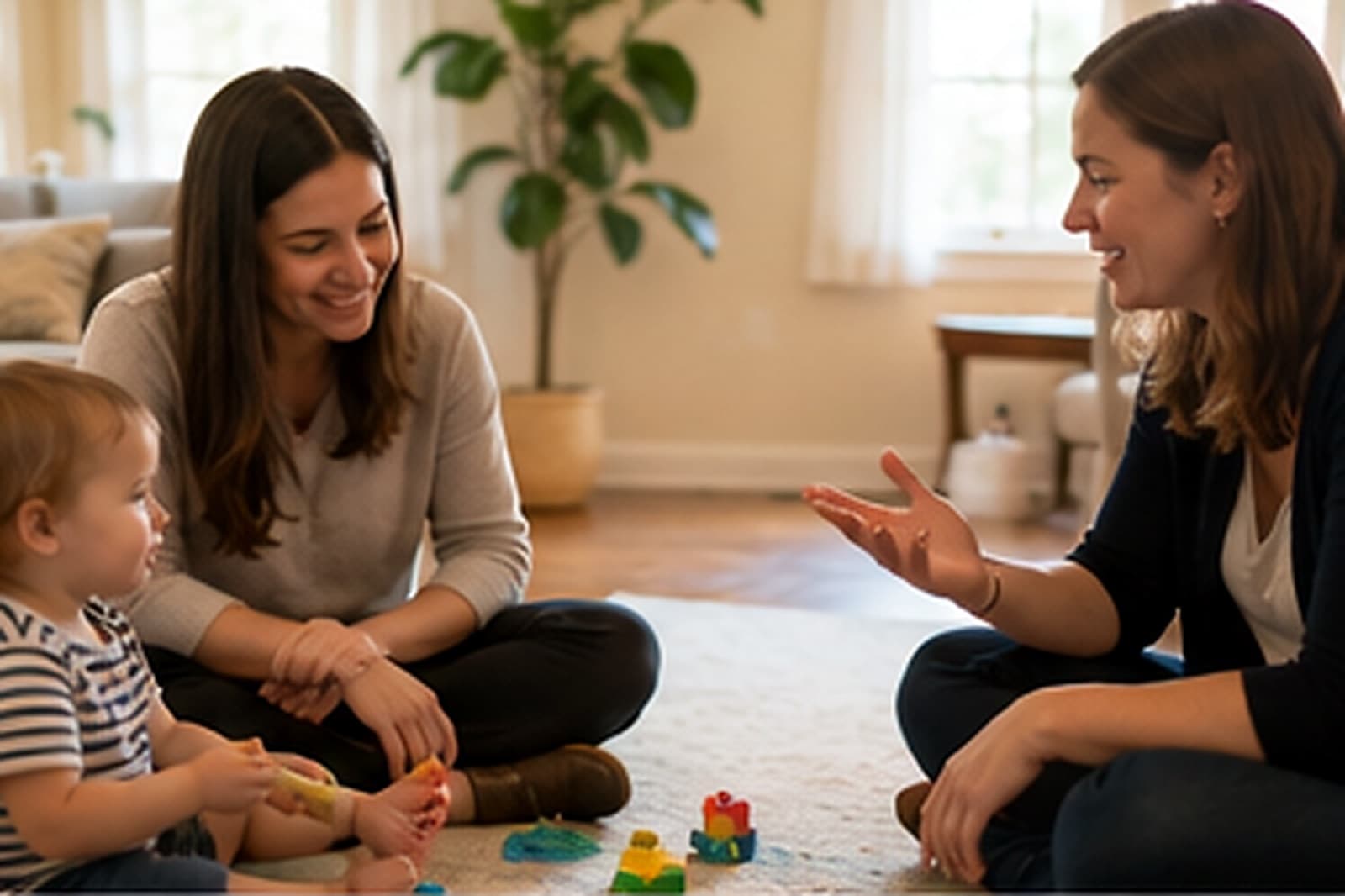
It also helps to remember what a session is. It is not a child at a table. It is a therapist on the floor, at the kitchen counter, at the park, teaching through what your child already wants to do. Most children are not worn out by it. They are disappointed when the therapist leaves. If after a few weeks your child is melting down at the sight of the car in the driveway, that is information, and the plan changes.
How do I find out what my child's number would be?
The real answer takes an assessment, but you can get a rough one in a few minutes. Our interactive ABA preview asks about your child's age, communication, and daily routines and shows likely focus areas, an estimated range of weekly hours, and a first-year timeline. Nobody calls you unless you ask. If you would rather talk it through, our get started page is the first step, and we do not keep a waitlist in Utah or Maryland. If you are still working out what ABA even is, start with our plain-English guide and come back to the numbers later.

About the reviewer
Lily Palmer, M.Ed., BCBA, LBA
Board Certified Behavior Analyst, Golden Touch ABA
Lily Palmer is a Board Certified Behavior Analyst and Licensed Behavior Analyst with Golden Touch ABA, where she designs and oversees in-home ABA programs for children with autism in Utah. She holds a Master of Education and studied at the University of Utah.